
 | |
| Appeared On : | March 24, 2014 |
| Location : | United States |
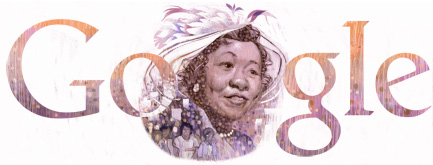
 Dorothy Irene Height was a monumental figure and unsung heroine in the movement for Civil Rights and Women's Rights. Rather than attempt to describe some of her contributions, here is a note from another Googler, who actually had the opportunity to work with Dr. Height: Dorothy Irene Height was a monumental figure and unsung heroine in the movement for Civil Rights and Women's Rights. Rather than attempt to describe some of her contributions, here is a note from another Googler, who actually had the opportunity to work with Dr. Height:
Dr. Dorothy Height was a woman who broke barriers and forged coalitions. She was a trailblazer at the forefront of many of the hard-fought civil rights victories of the 1960s, and was a powerful champion for social justice and equality and the policy issues still at stake today.
Before I came to Google, I worked for seven years at the nation’s largest and most diverse civil rights coalition, The Leadership Conference on Civil and Human Rights (www.civilrights.org), which Dr. Height chaired. Dr. Height was an active and visible presence in every major civil and human rights campaign I got to work on -- whether it was a campaign to reauthorize the Voting Rights Act, advocate for federal protection for LGBT workers (in the form of the Employment Non-Discrimination Act), or demand U.S. ratification of the Convention to End All Forms of Discrimination Against Women. She was an active and visible presence, challenging us to build stronger and more diverse alliances, to err on the side of justice, and to carry forward the work of the civil rights movement.
As we celebrate Dr. Height’s birthday, I’m honored to be able to say that I had the chance to work alongside her. And even more than that, I’m grateful that the work she began so many years ago continues today.
-Erica Swanson, Googler
As is often the case, our team faced a creative challenge: How to take someone's incredible legacy and celebrate it in an unique way within the context of a doodle?

Many routes were explored, but ultimately, a graceful portrait seemed the most appropriate direction. "Portrait" doodles are similar to illustrations you find on currency or stamps. There's definitely an air of dignity and reverence about them and while a bit atypical to the the quirkier things we celebrate, such as the recent animated doodles for For Day of Spring and Fall, there is still room to make them stand out creatively. You can see here that I haven't gotten that far yet. It's a scanned in drawing with some digital touch-ups. Yet, a long time is spent in these early stages to take a simple photo reference and alter the angle, tilt, gesture, lighting, etc, juuuust enough to give her a look that is at once aspirational, poised, and determined.
I also looked to the trends of magazine illustrations in the 60s happening around the same time of the Civil Rights movement. One thing I really like about this era in illustration is the ability to take photo referenced images, then mash them together in graphically interesting ways, utilizing line, value, lost and found edges, pattern, etc.
 My three heroes from that era – from top left, clockwise: Bernie Fuchs, Mark English, Bob Peak. I actually learned some of the drybrush look that Mark English invented from my mentor (and close friend of English), Bill Maughan. Mark even visited my class once. He nodded at a head drawing I was working on... good or bad, I dunno.I wanted to utilize this technique to call out several things regarding Dorothy Height: My three heroes from that era – from top left, clockwise: Bernie Fuchs, Mark English, Bob Peak. I actually learned some of the drybrush look that Mark English invented from my mentor (and close friend of English), Bill Maughan. Mark even visited my class once. He nodded at a head drawing I was working on... good or bad, I dunno.I wanted to utilize this technique to call out several things regarding Dorothy Height:
 top: Seen with President Kennedy as he signs the Equal Pay Act. below: President Obama signs a bill in her honor top: Seen with President Kennedy as he signs the Equal Pay Act. below: President Obama signs a bill in her honor
Happy 102nd, Dr. Dorothy Irene Height!
 posted by Mike Dutton, Doodler, with thanks to Erica Swanson posted by Mike Dutton, Doodler, with thanks to Erica Swanson | |
Tuesday, March 25, 2014
Dorothy Irene Heights 102nd Birthday born 1912

0 comments:
Post a Comment